
In GRASP, we connect language and comprehension skills with P4C (philosophy for children) and critical thinking. By philosophizing and organizing explorative dialogue, we’ll deepen concepts, arguments and reasoning. (T’Sas & De Mayer, 2025) Critical thinking is one of the key aspects of citizenship education in Europe. Thinking together across borders is consequently an fruitful approach in educating citizens of tomorrow.
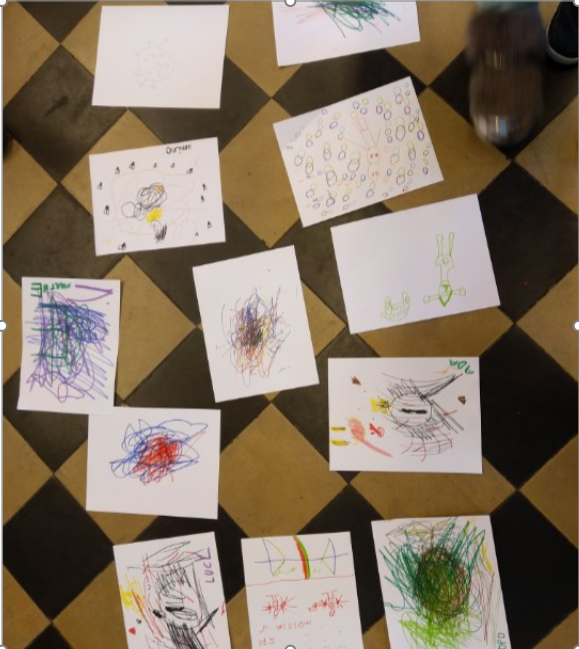
Does ‘ugly’ exists?
Quote (10 year old pupil):
“I think ugly exists because we are speaking about the word. If we couldn’t speak about it, it wouldn’t exist.“
GRASP is focused on creating a toolbox
for AI-supported teaching methods and activities in 6 key domains
Language
Reading, texts, language, communication
Media Literacy
Media, AI, social media, misinformation
STEAM
Mathematics, science, technology, problem solving
Religious education
Ethics, beliefs, religion, worldviews
Social Sciences
Society, citizenship, values, relationships
Arts & Crafts
Art, culture, creativity, expression
Insights and latest news
GRASP: Knowledge-rich learning is also about thinking with knowledge: Philosophizing with children
With its first international training event, the Erasmus+ project GRASP established a strong foundation for an innovative approach to reading comprehension, critical thinking, and philosophical inquiry in the classroom. Led by partners from Belgium, Bulgaria, Denmark, Latvia, and Lithuania and coordinated by AG Stedelijk Onderwijs, the project aims to empower teachers through a practical toolbox covering six educational domains: language, media literacy, STEAM, religion and ethics, social sciences, and arts and creativity.
An international learning environment
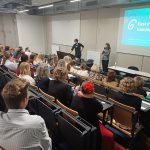
During the first training event, more than 60 teachers, researchers, and education experts from the five partner countries came together to:
Explore Philosophy for Children (P4C) methodologies as a driver of deeper understanding and reasoning;
Test and discuss AI-applications in the classroom;
Exchange teaching strategies that encourage students to think, question, and investigate together;
Evaluate and further develop prototypes of toolbox materials
The international setting created a rich exchange of ideas. Participants tested materials developed through focus-group input and research, engaged in dialogue about classroom implementation, and shared experiences and perspectives from their own educational contexts.
GRASP is made possible by the dedicated collaboration of partner organisations
from Belgium, Bulgaria, Denmark, Latvia and Lithuania, led by AGSO (Stedelijk Onderwijs Antwerpen)


